
How We Keep the Record
The E Don Kast methodology: every sheet fingerprinted at capture, read by two independent readers that must agree exactly, keyed blind by humans where they disagree, and traceable from every published number back to its sheet.
Every figure E Don Kast publishes traces back to a polling unit result sheet: the handwritten form completed at the polling unit and published by INEC to its IReV portal, or photographed and submitted by an observer on the ground. This page explains what happens between that sheet and a number on our board.
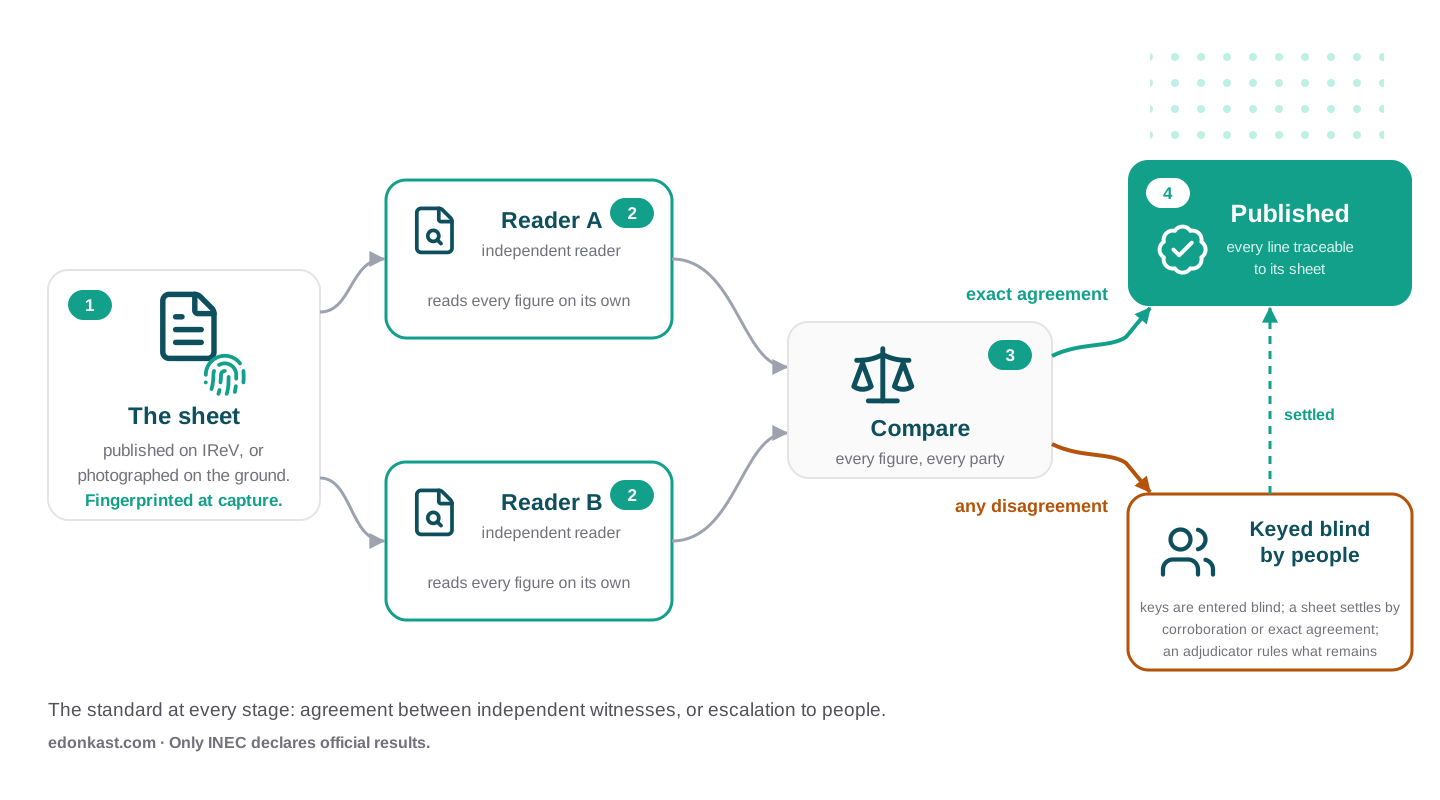
The sheet is fingerprinted the moment we capture it
When a sheet enters our archive, we compute a cryptographic fingerprint of the exact image and keep the image under it. If anyone, including us, altered the image afterward, the fingerprint would no longer match. Nothing in the archive is overwritten or deleted: when IReV replaces sheets on election night, we keep all versions, each under its own fingerprint. The archive holds what was published, permanently.
Two independent readers, and a simple rule
Each sheet is read by two independent readers. Each reader extracts every party's figure, the registered and accredited voter counts, and the valid vote total.
The rule: if the two readers agree exactly, every figure and every party, the sheet's numbers are published. Not approximately, not within a tolerance. Exactly. If they disagree on anything, the sheet is not published on machine reading at all. It goes to people.
We also do the math on every sheet ourselves, checking whether the party figures sum to the stated valid votes, rather than trusting any reader's arithmetic. A sheet that does not reconcile is flagged whether or not the readers agree.
Where machines disagree, humans key blind
Where the two readings disagree, the sheet goes to people, who key every figure blind: no keyer sees the readings or another keyer's entry. A sheet leaves keying one of two ways. A single blind transcription that corroborates the automated readings settles it. Where it cannot, two independent transcriptions must agree exactly, figure for figure. Anything still unresolved goes to a human adjudicator, who rules with the sheet in front of them.
We measure our keying accuracy the same way we measure everything else, including with sealed test batches whose answer key is opened only after keying is complete.
What we publish, and what we do not
We publish what the sheets say, with each line traceable to its sheet. We publish coverage honestly: how many polling units our record holds and, where INEC never published a sheet at all, the missing polling units by name, because a gap should be a specific, answerable question. We flag anomalies for scrutiny with the checks they fail stated, and the benign explanations acknowledged. We do not declare winners, adjudicate disputes, or present our aggregation as an official result. Only INEC declares official results.
Why this design
Any single reader, human or machine, makes mistakes. Two independent witnesses that must agree exactly make far fewer, and the mistakes they do make are visible as disagreements rather than silent errors. That is the whole method: independence, agreement between witnesses, escalation to people, and a fingerprinted trail from every published number back to the sheet it came from.